What Is A Trigger Pull Gauge
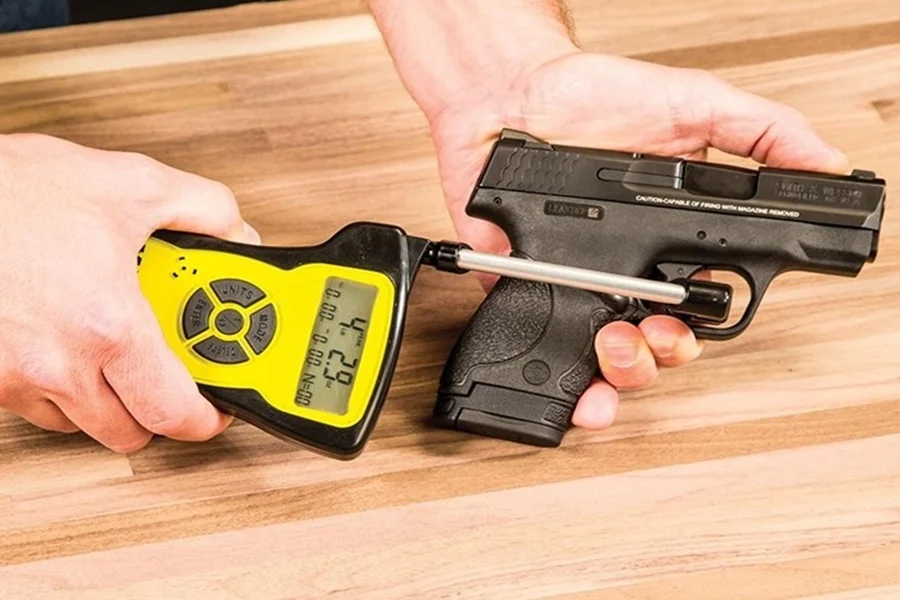
A trigger pull gauge is a specialized tool used to measure the amount of force required to engage the trigger of a firearm. This force, typically measured in pounds or ounces, is known as “trigger pull weight.” The gauge ensures precision by providing accurate readings, which can be critical for shooters who demand consistency and control. Whether you’re a competitive marksman, a firearms enthusiast, or someone focused on firearm safety and maintenance, understanding and measuring trigger pull weight can improve overall performance and reliability.
How Does It Work?
Trigger pull gauges operate by applying gradual pressure to the trigger until it releases. The device measures the force exerted during this process. These gauges typically come in two types: mechanical (analog) and digital.
- Operate without batteries.
- Use springs or scales to provide readings manually.
- Suitable for users who prefer simplicity or value durability over advanced features.
- Provide precise electronic readings on an LCD screen.
- Offer features like memory storage for multiple measurements and average-force calculations.
- Require battery power but are often more user-friendly for quick measurements.
Why Measuring Trigger Pull Matters
- Accuracy: A consistent trigger pull helps ensure that shots are fired predictably without unintentional jerking or pulling off-target.
- Safety: Understanding your firearm’s trigger pull can minimize accidental discharges caused by overly light or faulty triggers.
- Customization: Many shooters adjust their firearms to better suit personal preferences (e.g., lighter pulls for competition shooting). A gauge allows you to verify these modifications meet desired specifications.
Common Applications for Trigger Pull Gauges
| Application | Description | Example Users |
| Competitive Shooting | Precision tuning ensures consistent pulls across all firearms used in competition settings. | Target shooters, Olympians |
| Hunting | Adjusting triggers to avoid excessive force that might disturb aim during critical moments. | Hunters |
| Gunsmithing/Repairs | Ensures firearm modifications meet safety standards and work reliably over time. | Gunsmiths |
| Law Enforcement/Military | Verifying equipment complies with specific agency regulations regarding trigger weights. | Police officers, Armed forces |
Trigger pull gauges eliminate guesswork when assessing firearms’ functionality and performance. They’re essential tools for anyone who prioritizes precision, customization, or safety in their shooting experience.
What To Look For
1. Accuracy and Precision
The primary purpose of a trigger pull gauge is to measure the force required to pull a firearm’s trigger. Therefore, accuracy is non-negotiable.
- Look for gauges with fine measurement increments (e.g., 1/10th of a pound or grams).
- Digital models often provide more precise readings compared to mechanical ones.
- Ensure the gauge you choose has been calibrated properly or allows for recalibration when necessary.
2. Mechanical vs Digital
| Type | Pros | Cons |
| Mechanical | Durable, no batteries required | Less precise, harder to read for small weights |
| Digital | Highly accurate, easy-to-read display | Requires batteries, can be more expensive |
Consider which type fits your needs based on how often you’ll use it and whether you prioritize simplicity or advanced functionality.
3. Build Quality
- Materials used – stainless steel components tend to last longer than plastic alternatives.
- Reinforced handles for better grip and resistance over time.
- Compact designs that enhance portability without compromising sturdiness.
4. Weight Range Compatibility
- For handguns, look for gauges that can measure lighter pulls (e.g., 2–5 lbs range).
- Rifles may require tools capable of handling heavier pulls (upwards of 7–12 lbs).
Verify that your chosen model accommodates your firearm’s specific needs.
5. Ease of Use
- Digital models often feature backlit screens for better visibility in low-light environments.
- A clear scale with visible markings is essential if opting for a mechanical model.
- Tools with ergonomic grips reduce strain during repetitive testing sessions.
6. Additional Features
- Memory functions allow you to store readings from multiple tests.
- Automatic shut-off features help conserve battery life for digital units.
- Accessories like storage cases protect your tool from damage during transport.
Conclusion of Key Considerations
Carefully evaluating these factors ensures you invest in a trigger pull gauge tailored specifically to your preferences and requirements. By prioritizing accuracy, durability, compatibility with various firearms, and ease of operation, you’ll avoid frustration and get reliable results every time you test your firearm’s performance level.
What To Look For
When selecting a trigger pull gauge, whether mechanical or digital, there are several factors to consider to ensure you choose a reliable and accurate tool for your firearm needs. A good trigger pull gauge is an essential investment for firearm enthusiasts, gunsmiths, and competitive shooters who want to maintain optimal performance and safety. Below are the key aspects to evaluate.
1. Accuracy
- Importance: The primary function of a trigger pull gauge is to measure the weight of the force required to pull the trigger. Accuracy ensures you’re getting consistent readings that reflect the true measurement.
- Precision Levels: Digital gauges often offer higher precision by displaying measurements in smaller increments (e.g., ounces or grams), while mechanical gauges can be slightly less precise but still effective for general use.
- Look for products with clearly stated accuracy ratings (e.g., ±0.1 lb or ±0.05 kg).
2. Measurement Range
- Light triggers (e.g., competition pistols) require lower measurement ranges like 0–5 lbs (or equivalent in kilograms).
- Heavier triggers (e.g., hunting rifles or shotguns) may require a gauge with a broader range, such as 0–12 lbs or more.
- A wider range offers greater versatility but may sacrifice some precision at lower weights, so balance this factor based on your needs.
3. Build Quality and Durability
- Look for materials such as stainless steel or durable polymers that resist wear and tear over time, especially if you’ll use it frequently or in varying conditions (such as outdoor settings).
- Ensure any hooks, arms, or contact points are robust enough not to bend or break under pressure.
4. Ease of Use
An intuitive design enhances user experience:
– Mechanical gauges should have clear markings on their scale for easy reading without guesswork. – Digital gauges should feature buttons that allow quick resets, unit conversions (lbs/grams), and backlit displays for easy visibility in low-light environments. – Compact sizes and ergonomic grips improve handling during measurements.
5. Consistency Over Time
A reliable gauge should provide consistent results over repeated use without needing frequent calibration adjustments. Check reviews from other users regarding long-term reliability before purchasing.
6. Portability
If you plan on taking your trigger pull gauge to shooting ranges or fieldwork environments:
– Compact designs make transportation easier. – Consider whether it comes with a protective case to prevent damage during travel.
| Feature | Mechanical Gauge | Digital Gauge |
| Precision | Moderate | High |
| Ease of Use | Simple operation | Requires batteries |
| Portability | Often smaller | May be bulkier |
| Visibility | Analog scale | Backlit digital display |
| Price | Generally more affordable | Higher cost but more features |
7. Price Versus Features
Determine which features are essential for your usage before committing to a purchase: – Budget options can suffice if you only need occasional measurements. – For professionals or frequent users, investing in premium models with advanced features ensures better performance over time.
By focusing on these crucial aspects when choosing a trigger pull gauge, you’ll find one that meets both your functional needs and long-term expectations without unnecessary compromises on quality or reliability.
Best Trigger Pull Gauges
When it comes to selecting the best trigger pull gauges, the market offers a range of impressive options, each catering to different needs and preferences. Whether you’re a shooting enthusiast, professional gunsmith, or recreational hobbyist, finding a reliable gauge is crucial for accuracy and safety. Below, we’ll explore some of the best options in both mechanical and digital trigger pull gauges available today, along with their standout features.
1. Mechanical Trigger Pull Gauges
Mechanical trigger pull gauges are valued for their simplicity and durability. These operate without batteries or electronics, making them a dependable tool for years to come.
Key Features to Look For in Mechanical Gauges: – Durability: Constructed from robust materials like stainless steel or high-quality aluminum. – Ease of Use: Clear scale markings for precision measurement. – Portability: Compact designs often make them easy to carry in shooting kits.
| Brand/Model | Key Features | Price Range |
| Lyman Mechanical Gauge | Measures up to 12 lbs; ergonomic grip | $30-$50 |
| TriggerTech Simple Gauge | Lightweight; highly accurate readings | $20-$40 |
| Wheeler Engineering Mechanical Gauge | Sturdy body; repeatable accuracy | $25-$45 |
Mechanical models tend to appeal most to users who prefer non-digital tools or work outdoors where electronic devices may fail.
2. Digital Trigger Pull Gauges
Digital trigger pull gauges offer greater precision and feature advanced functionality such as memory storage for multiple readings. They’re ideal for those who regularly adjust triggers or require detailed data on weight calibration.
Advantages of Digital Gauges: – High Accuracy: Typically measure down to fractions of an ounce. – Versatile Options: Often include settings for various unit measurements (e.g., pounds, ounces, kilograms). – Data Storage: Some models allow you to save multiple test results.
| Brand/Model | Key Features | Price Range |
| Wheeler Professional Digital Gauge | Measures up to 12 lbs; backlit display | $60-$90 |
| Lyman Electronic Pull Gauge | Saves up to 10 readings; ergonomic design | $70-$100 |
| RCBS Premium Digital Gauge | Measures small increments with high precision; durable case included | $80-$120 |
Digital gauges are particularly useful in controlled environments like workshops where precise adjustments are critical.
3. Which Type Is Right For You?
Choosing between mechanical and digital trigger pull gauges depends largely on your intended use and budget: – Opt for mechanical gauges if you’re looking for reliability without dependence on batteries. – Choose digital models if you need enhanced precision, advanced features (e.g., memory storage), or work in professional gunsmithing applications.
Both types have their place in the shooter’s toolbox. Assessing your specific needs will help you determine which is better suited for your activities.
Best Trigger Pull Gauges
When it comes to selecting the best trigger pull gauges, both mechanical and digital options offer distinct advantages depending on your needs. Below, we’ll explore some of the top-rated options in each category, outlining their features, pros, and potential drawbacks to help you make an informed decision.
Mechanical Trigger Pull Gauges
1. Wheeler Engineering Mechanical Trigger Pull Scale
– Key Features:
– Measures trigger pulls ranging from 8 ounces to 8 pounds.
– Easy-to-read sliding indicator that locks at the maximum weight pulled.
– Lightweight and portable design for field use. – Pros:
– Affordable and durable option.
– No need for batteries or charging. – Cons:
– May be less precise compared to digital counterparts.
2. Lyman Mechanical Trigger Pull Gauge
– Key Features:
– Accurately measures pull weights from 0 to 12 pounds. – Tension arm ensures consistent readings across multiple tests. – Pros:
– High-quality construction with a comfortable grip. – Comes with a storage case for added convenience. – Cons:
– Some users might find the analog scale harder to interpret.
Digital Trigger Pull Gauges
Digital models are designed for those who prioritize precision and user-friendly functionality. These tools often feature advanced displays and memory storage capabilities, making them perfect for serious gun enthusiasts or professionals.
3. Lyman Digital Trigger Pull Gauge
– Key Features:
– Measures up to an impressive range of 12 pounds with an accuracy of +/-0.1 ounces. – Large digital display showing immediate results in ounces or pounds. – Memory function stores up to ten readings for comparison purposes. – Pros:
– Extremely accurate measurements suitable for fine-tuning firearms. – Easy-to-read display adds clarity during testing sessions. – Automatic shutoff conserves battery life when not in use. – Cons:
– More expensive than mechanical alternatives.
4. Wheeler Professional Digital Trigger Gauge
– Key Features:
– Highly sensitive sensor provides quick and accurate results up to an impressive range of over ten pounds. – Ergonomic design ensures better grip during operation. – Includes soft storage case for protection when not in use. – Pros:
– Ideal choice for professional gunsmiths due to its precision level.
– Robust build suitable even under frequent usage conditions.
– Cons:
Battery dependency may limit usability without proper maintenance.
Comparing Mechanical vs Digital: Which One Should You Choose?
| Feature | Mechanical Gauges | Digital Gauges |
| Accuracy | Moderate | High |
| Ease of Use | Simple | Advanced |
| Price Range | Affordable | Higher cost |
| Portability | Highly portable | Slightly bulkier |
| Maintenance Requirements | Minimal (no batteries) | Requires periodic battery changes |
Key Considerations When Choosing
- Your budget: Mechanical models are generally more affordable but less advanced than digital options.
- Frequency of use: If you’re regularly adjusting triggers, a digital model may save time with its precision and memory functions.
- Environment: For outdoor or rugged settings where electronics might fail, mechanical options could be more reliable due to their simplicity.
By carefully assessing your specific needs and comparing features between mechanical and digital gauges, you’ll be well-equipped to select the best tool for optimizing your firearm’s performance without overspending on unnecessary features.
What To Look For
1. Accuracy and Precision
The primary function of a trigger pull gauge is to measure the weight required to pull a firearm’s trigger. Accuracy is crucial, especially for gun owners who want consistent shooting performance or need exact measurements for safety and compliance purposes.
- Look for models with clear measurement increments (e.g., pounds or ounces).
- Digital gauges often offer precision down to decimal points, while mechanical gauges are reliable but may provide slightly less detailed readings.
- Consider calibration capabilities—some gauges allow you to recalibrate for ongoing accuracy.
2. Mechanical vs. Digital Gauges
| Type | Pros | Cons |
| Mechanical | Durable, simple design, no batteries needed | May lack fine precision in readings |
| Digital | High precision, easy-to-read displays | Requires batteries; tech-dependent |
Your preference will depend on whether you prioritize simplicity or advanced features like detailed readouts.
3. Ease of Use
- Grip: Ergonomic handles minimize hand fatigue during use.
- Readability: Opt for clear displays (analog or digital) that are easy to interpret under various lighting conditions.
- Attachment Mechanism: Some models feature hooks or clamps that securely hold the trigger during measurement without slipping.
4. Durability and Build Quality
- Look for robust materials such as stainless steel for mechanical parts or durable plastics with reinforced components in digital designs.
- Consider water resistance or protective casing if you’ll be using it outdoors frequently.
- Check reviews or manufacturer warranties as indicators of long-term reliability.
5. Measuring Range
- For competition shooters, lighter triggers (e.g., 1–5 lbs.) need high sensitivity in lower ranges.
- Hunting rifles may require broader ranges (e.g., up to 12 lbs.).
6. Portability
- Choose compact designs that fit easily into toolkits.
- Lightweight options reduce bulk during transport.
- Protective cases add an extra layer of convenience and safeguard against damage.
7. Price vs Value
- Basic mechanical options are cost-effective but might lack advanced features found in more expensive counterparts.
- Digital models tend to command higher prices but offer unmatched accuracy and convenience.
By carefully weighing these factors against your needs and preferences, you’re more likely to choose a trigger pull gauge that delivers consistent value over time.
What To Look For
When selecting the best trigger pull gauge, whether mechanical or digital, there are several critical factors to consider. Each feature of a gauge can greatly impact its performance, ease of use, and overall suitability for your specific needs. Here’s a detailed guide on what to prioritize when making your choice.
1. Accuracy and Consistency
- The primary function of a trigger pull gauge is to measure the weight or force required to pull the trigger of a firearm accurately.
- Look for:
- Devices calibrated to provide consistent readings across different trials.
- A low margin of error (preferably ±0.1 lbs for precise tools).
- Digital gauges often have an edge in accuracy due to their ability to provide more precise numerical readings compared to mechanical ones.
2. Durability and Build Quality
- The build quality determines how long the tool will last under regular use and varying conditions (e.g., range trips or at-home maintenance).
- Features to consider:
- Sturdy materials like stainless steel or high-grade polymers are ideal for durability.
- Mechanical gauges tend to be more robust as they lack electronic components, making them suitable for rugged environments.
3. Ease of Use
- The gauge should be simple enough for beginners while remaining reliable for professionals.
- Factors that enhance usability:
- Ergonomic design with comfortable grips reduces strain during repeated tests.
- Digital gauges often include backlit displays or easy-to-read screens, making them more user-friendly in low-light conditions.
4. Measurement Range
- Different firearms have varying trigger weights, so selecting a gauge with an appropriate range is essential.
- Key points:
- For precision rifles, lighter triggers in the 1-4 lb range are common.
- Handguns may require measurements in the 4-10 lb range.
- Ensure your chosen tool can accommodate all firearms you plan to test.
| Type | Recommended Range | Example Usage |
| Precision Rifle | 1-4 lbs | Competitive shooting, hunting |
| Handgun | 4-10 lbs | Self-defense, general-purpose |
5. Mechanical vs Digital Gauges
- Mechanical Gauges:
Reliable under extreme conditions without battery dependency. Often preferred by traditionalists who appreciate simplicity and durability. - Digital Gauges:
Feature-rich with LCD displays showing precise measurements down to decimals. Many include memory functions allowing multiple readings stored for comparison.
| Feature | Mechanical Gauge | Digital Gauge |
| Accuracy | Good | Excellent |
| Durability | High | Moderate (electronics limit) |
| Ease of Use | Basic | Advanced |
| Price Range | Affordable | Mid-to-high |
6. Additional Features
- Memory recall functions (common in digital models) let you review past readings easily during testing sessions.
- Calibration tools ensure the device maintains accuracy over time.
- Compact storage cases protect your investment during transport and storage.
- Audible notifications on digital models signal when accurate measurements are taken, streamlining workflows in busy settings.
Selecting the perfect trigger pull gauge boils down to understanding your unique needs as a shooter or firearm enthusiast. By carefully weighing these factors—accuracy, usability, build quality—you can make an informed decision that ensures reliable performance and long-term satisfaction from your tool of choice without unnecessary compromises on quality or functionality.