Garden Shed
A garden shed is one of the most practical and popular solutions for lawn mower storage. Its versatility, durability, and ability to blend into your outdoor space make it an excellent option for homeowners. Here’s how to use a garden shed effectively for storing your lawn mower while keeping it organized and protected.
Benefits of a Garden Shed for Lawn Mower Storage
- Protection from the Elements: A garden shed shields your lawn mower from rain, snow, UV rays, and other weather conditions that can lead to rust or mechanical damage.
- Organized Space: Beyond storing your mower, a shed provides space for other gardening tools, accessories, and seasonal equipment.
- Customizable Design: Sheds come in various sizes and materials (wood, metal, plastic), allowing you to choose one that suits your yard’s design and storage needs.
- Security: With a proper lock system in place, a garden shed ensures that your valuable equipment is safe from theft.
Essential Features to Consider
| Feature | Why It Matters |
| Size | Ensure the shed can comfortably accommodate the mower with room to walk around it. |
| Material | Wood sheds offer aesthetic appeal but require maintenance; metal sheds are durable but can rust; plastic sheds are lightweight and weather-resistant. |
| Access | Wide doors or ramps make it easier to move the mower in and out without strain. |
| Ventilation | Proper airflow prevents moisture buildup that could lead to rust or mildew issues on equipment. |
| Flooring | A sturdy floor helps support the weight of heavy mowers while keeping them off damp ground. |
Maximizing Space in Your Garden Shed
- Shelving Units: Install shelves on walls for smaller tools like pruning shears, gloves, or fertilizers.
- Hooks: Use heavy-duty hooks for hanging cords or lightweight equipment that doesn’t need floor space.
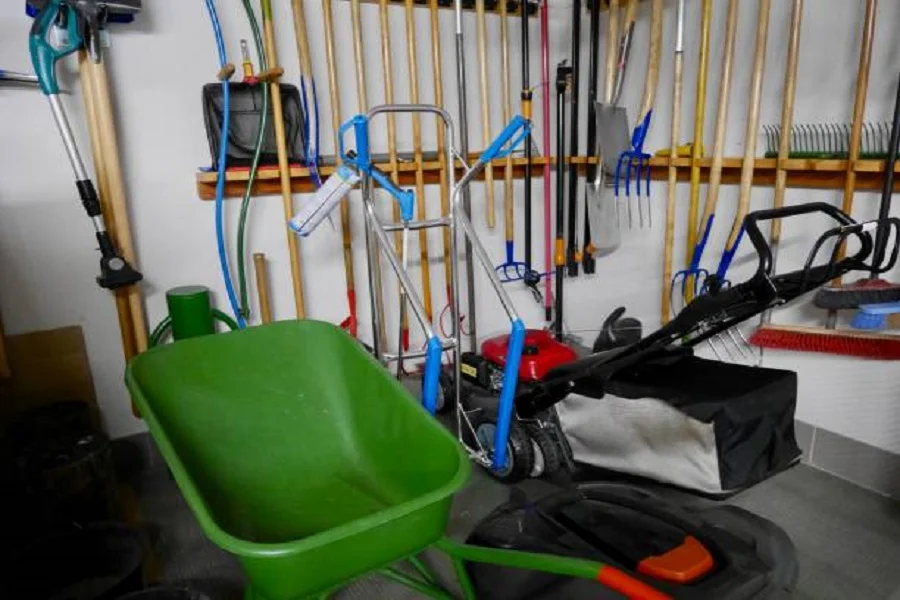
- Tool Racks: Add a vertical rack along one wall to store rakes, shovels, or brooms upright.
- Storage Bins: Place labeled bins under shelves for spare parts like blades or small engine components.
Maintenance Tips
- Clean the interior of the shed regularly to remove dirt or debris that might accumulate over time.
- Inspect the structure seasonally—check for leaks in roofing materials or signs of pest damage (e.g., rodents).
- For riding mowers or push mowers with engines, always clean off grass clippings before storing them inside to prevent mold growth.
Enhancing Accessibility
- Add a small ramp leading up into the entrance.
- Opt for sliding doors instead of hinged ones—they save space outside while making it simpler to maneuver bulky items.
A well-maintained garden shed not only protects but also streamlines access to your lawn care tools whenever needed—offering both practicality and peace of mind while complementing any outdoor aesthetic perfectly without overwhelming available yard space.
Garage
Benefits of Storing in a Garage
- Weather Protection: Keeps your lawn mower safe from rain, snow, and UV rays that could cause rust or damage over time.
- Convenience: Easy access to your mower without having to venture far from your home.
- Security: Garages often have locking mechanisms that help prevent theft.
Organization Tips for Lawn Mower Storage
- Assign one corner or wall specifically for outdoor equipment like mowers, trimmers, or leaf blowers.
- Use tape or markings on the floor to visually define this space.
- Install wall-mounted hooks or pegboards nearby to keep smaller gardening tools off the floor.
- Avoid leaving tools scattered near the mower to prevent accidental trips or damage.
- If you have a limited amount of space in the garage, invest in a foldable lawn mower model.
- These can be collapsed vertically and stored against walls or even under workbenches.
Storage Options within Your Garage
| Option | Description |
| Wall-Mounted Racks | Install racks to store smaller parts (e.g., fuel cans) above ground level. |
| Ceiling Storage | Use ceiling-mounted shelves for lightweight items; keep heavy tools below. |
| Rolling Stands | For heavier mowers, use rolling platforms equipped with brakes for easy movement and stability. |
Maintenance Tips While Using Garage Storage
- Ensure proper ventilation in the garage during summer months so heat buildup doesn’t affect any fuel left in the tank.
- Always clean grass clippings from undercarriages before storing mowers inside to prevent unpleasant odors or pest attraction.
- If storing during winter, consider adding a protective cover over the mower to shield it from dust accumulation.
Using your garage effectively lets you balance convenience with protection while keeping other areas of your home free for alternative uses.
Garage
The garage is one of the most practical and popular spaces for storing a lawn mower. Its large size and proximity to outdoor areas make it an ideal location. However, to ensure your mower stays in optimal condition and your garage remains organized, strategic planning is essential.
Benefits of Storing a Lawn Mower in the Garage
- Weather Protection: Garages shield your lawn mower from harsh weather conditions such as rain, snow, or excessive sunlight.
- Security: A locked garage provides an added layer of safety against theft.
- Convenience: Most garages are easily accessible from the home or driveway, making it convenient to transport the mower between storage and use.
Preparing Your Garage for Lawn Mower Storage
- Remove unused or unnecessary items.
- Group similar tools together (e.g., yard tools with yard tools) to free up space.
- Allocate a specific section of your garage for outdoor equipment like lawn mowers.
- Use floor markings or wall-mounted shelving to keep the area organized.
- For smaller or foldable mowers, consider investing in wall hooks or ceiling racks designed for heavy equipment storage.
- This frees up valuable floor space while keeping the mower safely out of the way.
- Use drip trays under gas-powered mowers to catch leaks and prevent stains on your flooring.
- Place moisture absorbers nearby to prevent rust caused by humidity.
Organizing Accessories Alongside Your Mower
| Accessory | Storage Solution | Notes |
| Gas cans | Store upright on durable shelves | Keep away from ignition sources |
| Extension cords | Use cord organizers on walls | Prevent tangling |
| Replacement blades | Place neatly in labeled drawers or bins | Ensure easy access |
Safety Tips for Garage Storage
- Always store fuel-powered mowers with an empty tank if they will be unused for an extended period, reducing fire hazards inside the garage.
- Never block emergency exits or walkways with stored equipment.
- Ensure proper ventilation if you’re storing gas-powered equipment alongside chemicals like fertilizers or pesticides.
Seasonal Adjustments
Your storage setup may need slight adjustments depending on the season: – In winter months, cover your mower with a breathable tarp to protect it from dust and potential moisture buildup. – During peak usage seasons (spring/summer), ensure it’s easily accessible without having to move other items around excessively.
By taking these simple yet effective steps, you can transform your garage into a fully functional storage space while prolonging the life of your lawn mower and ensuring safety within your home’s workspace.
Potting Shed
A potting shed can serve as a versatile and stylish solution for storing your lawn mower while keeping it accessible and protected from the elements. Designed primarily for gardening purposes, potting sheds often offer enough space to house a lawn mower alongside tools, pots, soil, and other supplies—making them a multifunctional storage option for homeowners who love maintaining their outdoor spaces.
Benefits of Using a Potting Shed for Lawn Mower Storage
- Weather Protection: Potting sheds are typically constructed to shield contents from rain, sunlight, and other harsh weather conditions. Storing your lawn mower here helps preserve its longevity by reducing exposure to the elements.
- Organized Storage: With shelves, hooks, and designated areas for gardening tools, a potting shed ensures that your equipment stays tidy and within reach.
- Aesthetic Appeal: Potting sheds are charming structures that can enhance the overall look of your backyard or garden.
Features to Consider in a Potting Shed
When selecting or designing a potting shed suitable for storing your lawn mower, keep these features in mind: 1. Size: Make sure the shed has enough space not only to store your mower but also to allow easy access. Measure your lawn mower’s dimensions (including its handle if it doesn’t fold) before buying or building. 2. Ventilation: Proper airflow is essential in preventing humidity buildup inside the shed, which could lead to rust on metal parts of the mower. 3. Durability: Choose materials like treated wood or metal that can withstand weather changes while requiring minimal maintenance. 4. Wide Door Access: A double-door design is ideal for moving bulky items like lawn mowers in and out without hassle.
Organizing Your Lawn Mower in the Potting Shed
Here are some practical ways to maximize space while keeping everything well-organized: – Install sturdy wall-mounted hooks or pegboards to hang lightweight gardening tools such as pruning shears or gloves. – Use stackable bins for storing smaller items like seeds or plant food—this keeps them separate from heavier machinery. – Consider adding shallow shelves above eye level where less frequently used supplies can be stored safely.
| Storage Element | Purpose |
| Wall Hooks | Hang accessories like extension cords or lightweight tools |
| Shelves | Store plant pots, fertilizers, or cleaning supplies |
| Floor Space | Reserve clear floor area specifically for bulky equipment like mowers |
Maintenance Tips When Using a Potting Shed
To ensure both your shed and its contents remain in optimal condition: – Regularly sweep out dirt and debris from the floor of the shed. – Check periodically for leaks or signs of water damage that could affect stored items. – Before placing your lawn mower inside after use, clean off any grass clippings or moisture to prevent mold growth inside the shed.
Using a potting shed as storage not only protects your investment in equipment but also creates an organized workspace tailored to both gardening needs and practical storage solutions.
Potting Shed
A potting shed is more than just a space for gardeners—it can also serve as an excellent storage solution for your lawn mower. With its versatile design and functionality, it provides a dedicated area to keep your gardening tools, lawn equipment, and other essentials well-organized. Here are some tips and strategies to make the most out of your potting shed as a lawn mower storage option.
Benefits of Using a Potting Shed for Lawn Mower Storage
- Dedicated Space: A potting shed offers a specific area for storing not only your lawn mower but also related accessories like fuel cans, spare parts, and maintenance tools.
- Weather Protection: These sheds are typically designed to protect items from harsh elements such as rain, sun, or snow. This helps prolong the life of your lawn mower by preventing rust or mechanical issues caused by exposure.
- Organization: Potting sheds often include shelves, hooks, and cabinets that can help you efficiently store various items alongside your lawn mower without creating clutter.
Tips for Storing Lawn Mowers in a Potting Shed
- Select a corner or wall within the potting shed exclusively for the lawn mower.
- Use floor markings or install rubber mats to define the storage spot and prevent accidental leaks from staining the surface.
- Make moving heavy push mowers or riding mowers easier by adding a sturdy ramp.
- Consider roll-out platforms with caster wheels so you can easily maneuver the mower in tight spaces.
- For smaller electric mowers, look into vertical wall-mounted brackets designed for lightweight equipment.
- Use hooks or hangers on walls to store cables and hoses neatly around the machine.
- Install ventilation systems or dehumidifiers within your potting shed to avoid moisture buildup that can damage equipment.
- Consider adding silica gel packs around metal components to prevent rust formation.
Maintenance Station Add-On
Transform part of your potting shed into an efficient maintenance station for your lawn mower:
– Workbench Setup: Install a small bench where you can perform oil changes, blade sharpening, and minor repairs conveniently within one space. – Tool Storage Board: Use pegboards with labeled hooks to organize wrenches, screwdrivers, spark plug tools, etc., making it easy to grab what you need during maintenance tasks. – Storage Drawers or Bins: Keep extra fuel filters, oil containers, belts, blades, and other spare parts in clearly labeled bins under the workbench.
| Feature | Benefits | Setup Tips |
| Ramp/Platform | Easier movement | Use slip-resistant materials |
| Vertical Storage | Saves space | Check weight limits before hanging |
| Dehumidifier | Prevents moisture damage | Place near vents or corners |
| Tool Pegboard | Accessible tool organization | Label hooks for easy identification |
Safety Precautions
When using a potting shed as storage for your lawn mower:
– Ensure that gasoline-powered machines are stored away from flammable substances like fertilizer or paint.
– Regularly check ventilation to prevent any buildup of fumes inside enclosed spaces.
– Lock the shed securely when not in use if children have access to your yard.
By thoughtfully organizing your potting shed with these strategies in mind, you will create an efficient space that protects both your lawn mower and other gardening essentials while keeping everything easily accessible whenever needed.
Custom Built Shelving
When it comes to storing your lawn mower, custom-built shelving offers a tailored solution that optimizes your available space while keeping your tools and equipment organized. This approach is ideal for homeowners who want a storage system that fits their specific needs and prevents wasted space.
Benefits of Custom Built Shelving
- Maximizes Space: Create shelving units of varying heights and widths to accommodate not only your lawn mower but also other gardening tools and supplies. This ensures every inch of space is utilized effectively.
- Tailored Fit: Whether you have a compact garage, spacious tool shed, or outdoor storage area, custom shelving can be designed to perfectly match the dimensions and layout.
- Durability: By selecting high-quality materials like treated wood or metal, custom shelving solutions can support heavy equipment such as gas-powered lawn mowers or additional attachments.
- Improved Organization: With designated shelves for accessories (blades, oil, filters), you can keep everything neat, accessible, and easy to find.
Materials for Custom Shelving
Choosing the right materials is crucial for durability and functionality: – Plywood or Treated Wood: Ideal for indoor setups like a garage or shed; these materials are durable yet easy to customize. – Metal Shelves: Perfect for heavier loads; resistant to water damage if stored in semi-outdoor spaces. – Waterproof Plastic Shelves: A lightweight option suitable for environments prone to moisture.
| Material | Durability | Cost | Best Use Case |
| Treated Wood | High | Moderate | Indoor spaces |
| Metal | Very High | Higher | Heavy-duty/multi-purpose setups |
| Waterproof Plastic | Moderate | Lower | Moisture-prone environments |
Design Ideas for Lawn Mower Storage
- Wall-Mounted Units: For smaller areas, use wall-mounted shelves with reinforced brackets strong enough to hold additional attachments like grass bags or trimmer heads underneath the mower slot.
- Pull-Out Drawers: Install pull-out platforms within lower shelves specifically made for wheeled mowers. This makes accessing the machine easy while avoiding damage during retrieval.
- Overhead Storage: For infrequent use or seasonal storage, consider overhead racks with pulleys or lifts to secure lightweight electric mowers.
Practical Tips
- Measure the dimensions of your lawn mower before designing the shelves so they fit snugly without wasted space.
- Include ventilation gaps if storing gas-powered mowers indoors to prevent fumes from accumulating in tightly packed areas.
- Label each shelf section clearly (e.g., “Blades,” “Fuel,” “Attachments”) so you can quickly locate items when needed.
Custom-built shelving not only makes lawn mower storage efficient but also adds an element of personalization to your space. With proper planning and quality materials, it can serve as an investment that enhances both functionality and aesthetics in your home’s storage areas.
Charging Station
Creating a designated charging station for your electric or battery-powered lawn mower can streamline your storage process while keeping your tools ready for use. As battery-powered lawn equipment becomes increasingly popular due to its eco-friendly and low-maintenance benefits, ensuring a convenient setup for charging is key. Below, we’ll explore how to design an efficient and safe charging area tailored specifically for your mower.
Benefits of a Dedicated Charging Station
A well-organized charging space offers several advantages:
– Convenience: Keeps batteries charged and easily accessible when needed.
– Safety: Reduces risks of tripping over cords or short-circuiting equipment.
– Longevity: Ensures batteries are maintained in optimal conditions, extending their lifespan.
Steps to Set Up Your Lawn Mower Charging Station
- Pick a dry, well-ventilated area away from direct sunlight or moisture to prevent damage to the batteries.
- Ideal spaces include corners of garages, garden sheds, or utility rooms where outlets are readily available.
- Use wall-mounted power strips with surge protection to safeguard against power fluctuations.
- Ensure the outlet meets the voltage requirements specified by your lawnmower’s manufacturer.
- If multiple devices need charging (e.g., additional tools like string trimmers), consider adding extra outlets.
- Add small shelves or hooks nearby to store spare batteries, extension cords, or the charger itself.
- Use labeled bins for quick access to parts and accessories related to maintenance.
- Install cable clips or cord organizers along walls or shelving units to keep wires untangled and out of the way.
- For ease of use, label each charger cable so it’s clear which device it belongs to.
- Avoid overloading circuits by calculating the total energy draw of all devices plugged into the station.
- Keep fire extinguishers nearby as part of general safety precautions in case of electrical malfunctions.
Materials Checklist
| Item | Purpose | Example Options |
| Surge-Protected Power Strip | Safe charging | 6-outlet strip with USB ports |
| Wall Hooks | Cable management | Heavy-duty adhesive hooks |
| Shelving Unit | Organizing chargers/batteries | Compact metal shelving |
| Cord Protectors | Preventing tripping/tangling hazards | Rubber floor cord protectors |
Environmental Considerations
When designing a charging station, consider ways you can make it more environmentally friendly:
– Use energy-efficient chargers that automatically shut off when batteries are fully charged.
– Position the station near natural light sources if possible (though not in direct sunlight) to avoid using artificial lighting during daytime hours. – If upgrading tools in the future, invest in equipment with interchangeable battery systems that reduce waste.
By creating a dedicated charging station, you not only enhance safety and efficiency but also establish good maintenance habits that prolong the life of your mower’s batteries and improve overall functionality.